
How Much Do YouTubers Actually Make?
It’s the question every aspiring creator types into Google at 2am: how much do YouTubers make?
The honest answer? It varies wildly. A finance creator with 200K subscribers can easily out-earn a gaming channel with 2 million. A viral video in Norway generates 14x more revenue than the same video watched in India. The platform is generous but not equal — and understanding how it works is the difference between a side hobby and a full-time income.
This guide breaks down exactly how YouTube pays creators, what CPM and RPM rates look like in 2026, which niches and countries pay the most, and how you can use our free YouTube Money Calculator to estimate earnings for any channel — including your competitors’.
What Is YouTube AdSense Revenue?
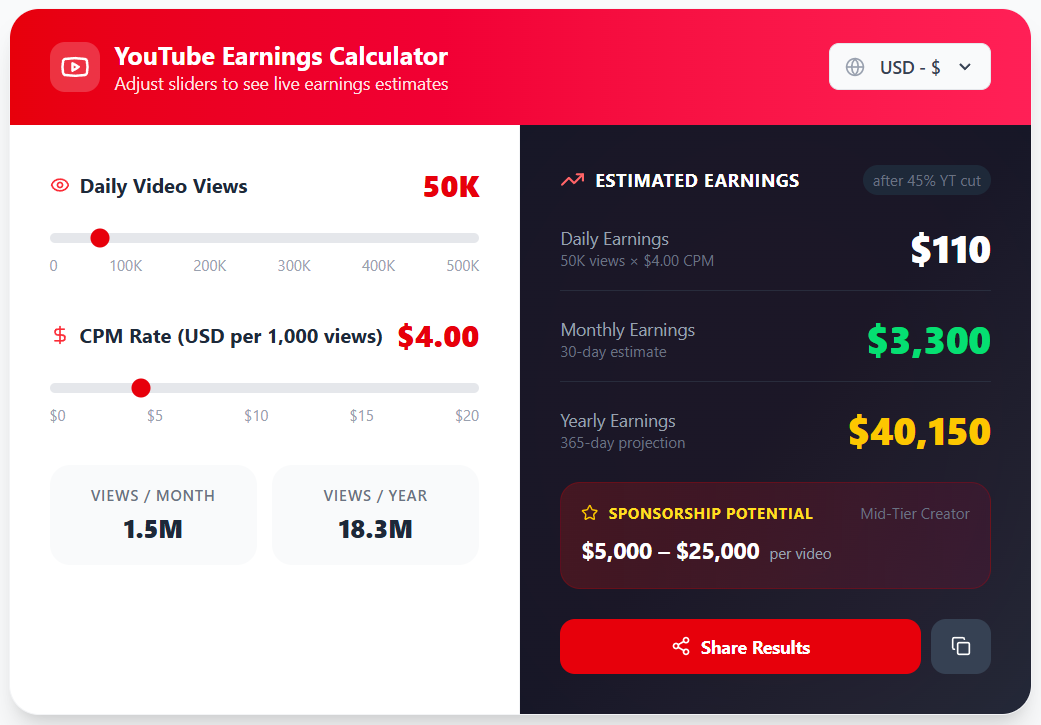
YouTube pays creators through its Partner Programme (YPP) via Google AdSense. When an ad is shown before, during, or after your video, advertisers pay YouTube. YouTube then passes 55% of that revenue to the creator and keeps 45%.
This is the core revenue stream for most YouTube channels. The two metrics at the centre of it are:
- CPM (Cost Per Mille): What advertisers pay per 1,000 ad impressions — before YouTube’s cut.
- RPM (Revenue Per Mille): What the creator actually receives per 1,000 video views — after YouTube’s 45% cut.
Formula: RPM = CPM × 0.55
If your CPM is $10, your RPM is $5.50. For every 100,000 views, you’d earn approximately $550 from AdSense.
YouTube CPM Rates by Country in 2026
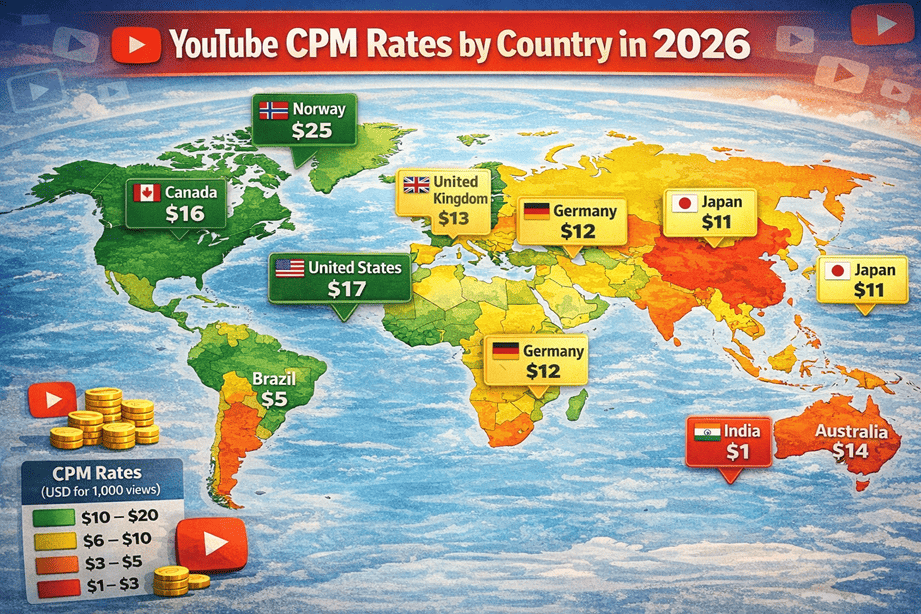
Your viewers’ geographic location is the single biggest variable in your YouTube income. Advertisers pay dramatically more to reach audiences in high-GDP countries because those viewers are more likely to convert on their ads.
Here are the top countries by CPM in 2026:
| Country | CPM (USD) |
|---|---|
| 🇳🇴 Norway | $43.15 |
| 🇩🇪 Germany | $38.85 |
| 🇲🇩 Moldova | $29.50 |
| 🇩🇿 Algeria | $24.50 |
| 🇸🇪 Sweden | $18.18 |
| 🇰🇷 South Korea | $17.00 |
| 🇫🇮 Finland | $14.90 |
| 🇬🇧 UK | $13.75 |
| 🇨🇦 Canada | $13.50 |
| 🇺🇸 USA | $13.00 |
| 🇦🇺 Australia | $11.50 |
| 🇳🇱 Netherlands | $11.20 |
| 🇦🇪 UAE | $8.50 |
| 🇮🇳 India | $3.20 |
| 🇧🇷 Brazil | $3.00 |
A creator whose audience is primarily based in Norway earns 14x more per view than the same creator with a primarily Indian audience. This is why targeting your content towards Tier 1 English-speaking markets — even through language, topics, or publishing timing — can dramatically multiply your revenue without gaining a single new subscriber.
YouTube CPM Rates by Niche in 2026
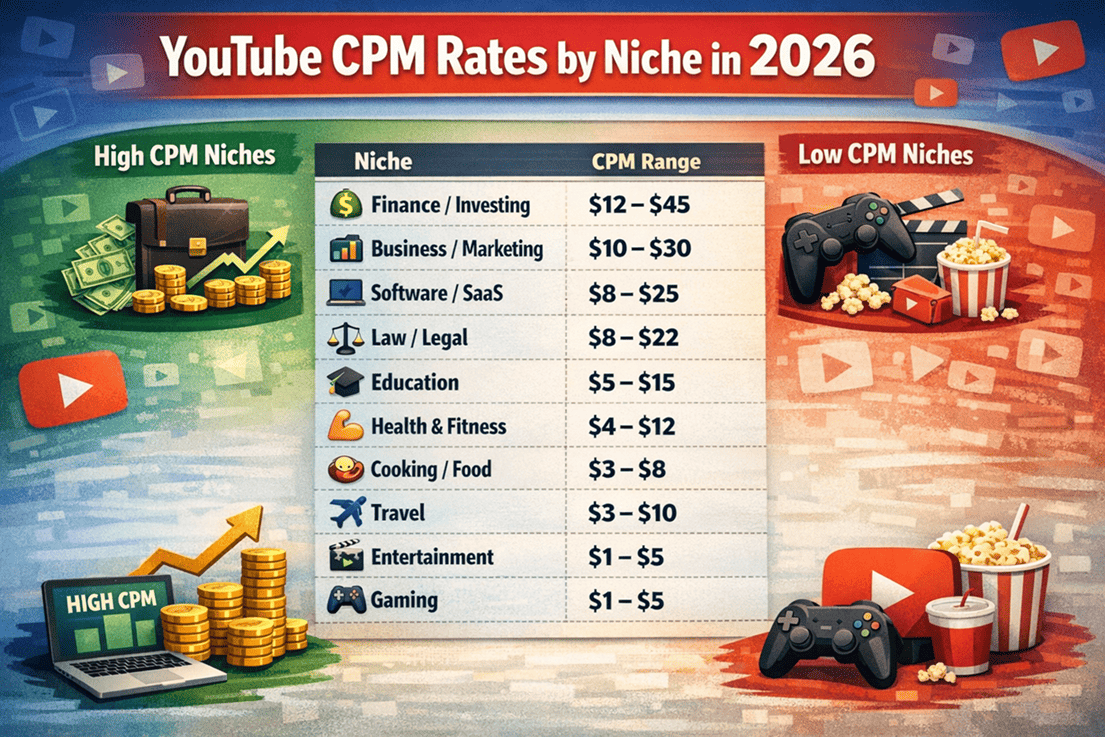
Beyond geography, your content category is the second-biggest factor in what you earn. Finance and business channels attract premium B2B advertisers who pay $12–$45 CPM, because their viewers are people actively researching high-value products (mortgages, software, investments).
Entertainment and gaming channels? They attract lower-value consumer ads at $1–$5 CPM, despite often having much larger audiences.
| Niche | CPM Range |
|---|---|
| 💰 Finance / Investing | $12 – $45 |
| 📊 Business / Marketing | $10 – $30 |
| 💻 Software / SaaS | $8 – $25 |
| ⚖️ Law / Legal | $8 – $22 |
| 🎓 Education | $5 – $15 |
| 💪 Health & Fitness | $4 – $12 |
| 🍳 Cooking / Food | $3 – $8 |
| ✈️ Travel | $3 – $10 |
| 🎬 Entertainment | $1 – $5 |
| 🎮 Gaming | $1 – $5 |
Key insight: A finance channel averaging 50,000 daily views earns roughly $9,900/month. A gaming channel with the same views earns roughly $900/month. Same views, 11x difference in income.
How Much Do YouTubers Make Per 1,000 Views?
This is the most searched question around YouTube monetization, and the answer requires context.
The Short Answer: Most creators earn between $1 – $10 per 1,000 views (RPM) from AdSense. The average across all niches globally sits around $2 – $4 RPM.
The Nuanced Answer:
- A US-based finance creator might earn $18 – $25 RPM
- A gaming creator with global traffic might earn $1.50 – $3 RPM
- A cooking channel targeting Southeast Asia might earn $0.80 – $2 RPM
The people you see online bragging about earning “$50 per 1,000 views” are almost certainly finance or legal creators targeting high-income English-speaking audiences — and they’re not lying. Those CPM rates are real. But they’re not the norm.
How Much Does a YouTuber With 1 Million Subscribers Make?
Subscriber count is one of the most misleading numbers in the creator economy. Subscriptions don’t equal money — views equal money.
A 1 million subscriber channel that posts once a month and averages 200K views per video earns far less than a 300K subscriber channel posting 3 times a week.
That said, here’s a realistic estimate of monthly AdSense income for a 1 million subscriber channel:
| Niche | Avg. Views/Month | Est. Monthly Earnings |
|---|---|---|
| Finance | 1.5M | $12,000 – $30,000 |
| Business / Marketing | 1.5M | $8,000 – $22,000 |
| Education | 1.5M | $3,750 – $11,250 |
| Health & Fitness | 1.5M | $3,000 – $9,000 |
| Cooking | 1.5M | $2,250 – $6,000 |
| Gaming | 1.5M | $750 – $3,750 |
These figures are AdSense alone — many creators at this level also earn from sponsorships, memberships, and affiliate income, often surpassing their AdSense revenue.
YouTube Income Beyond AdSense: The Full Picture
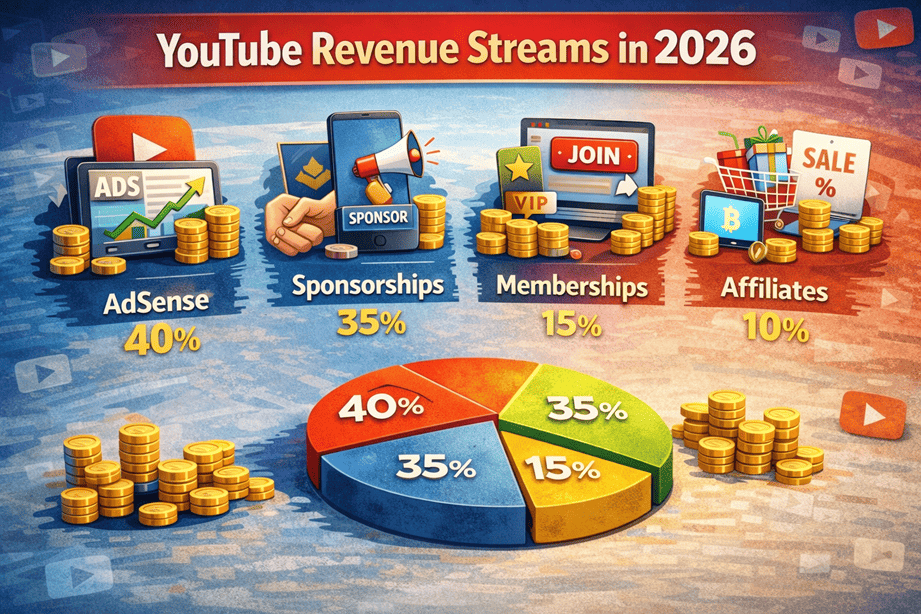
Here’s the truth that YouTube’s paycheck alone doesn’t tell: AdSense is rarely the majority of a top creator’s income.
The most successful YouTubers stack multiple revenue streams:
1. Sponsorships (Brand Deals)
Sponsored segments typically pay $0.01 – $0.05 per view for a dedicated mention. A video averaging 100K views can generate:
- Nano creator (10K views/video): $100 – $500/deal
- Micro creator (100K views/video): $1,000 – $5,000/deal
- Macro creator (1M views/video): $10,000 – $50,000/deal
For finance and SaaS niches, these rates are often 2-3x higher because the audience has strong purchase intent.
2. Channel Memberships
YouTube Memberships let your audience pay $0.99 – $49.99/month for exclusive perks. YouTube takes 30% on the web (70% goes to the creator). For engaged communities, a 1% conversion on 500K subscribers means 5,000 paying members — potentially $25,000+/month.
3. Super Chat & Super Thanks
Live streams and videos with high engagement can generate significant income from Super Chats. Finance and podcast creators frequently earn $1,000 – $10,000 per live stream in tips alone.
4. Affiliate Marketing
Recommending products in video descriptions with affiliate links can silently generate 5-20% commissions. A single software recommendation to a relevant audience can generate $500 – $5,000/month passively.
5. Digital Products & Courses
High-CPM niches (finance, business, fitness) convert viewers into course buyers at $97 – $997 price points. A single email list of 10,000 subscribers from YouTube can generate $50,000+ on a course launch.
A well-optimised channel with 500K subscribers might earn $3,000/month from AdSense, but $20,000+/month total when all streams are combined. This is why subscriber count is a vanity metric — revenue diversification is the real game.
How to Use Our YouTube Money Calculator
Our free YouTube Money Calculator at InsyFeed is built to give you the most accurate income estimate available — not just a rough guess.
Here’s exactly how to use it:
Step 1: Check Any Channel Live
Paste any YouTube channel URL or handle (e.g., @MrBeast or @GrahamStephan) into the Live Channel Lookup tool. It pulls real-time data from the YouTube API:
- Subscriber count and total views
- Estimated daily, monthly, and yearly AdSense earnings
- Estimated sponsorship rate range based on their view volume
- Channel keywords, banner, and category tags
This is one of the most powerful free competitor analysis tools available. Paste your competitor’s channel and instantly see their estimated earnings floor and ceiling.

Step 2: Run Your Own Scenario with the Manual Calculator
Use the Earnings Forecaster to model your own channel:
- Drag the Daily Views slider to your average (start at 50K for a baseline)
- Select your country from the CPM table — it auto-fills the CPM based on real 2026 data
- Select your niche to further refine the CPM estimate
- Watch your daily / monthly / yearly earnings update in real-time
- Switch currency to see results in USD, EUR, GBP, INR, JPY, AUD, or CAD
Step 3: Plan Your Growth Strategy
The CPM tables are clickable and dynamic. You can see that switching your content focus from Gaming ($3 CPM) to Finance ($20 CPM) could multiply your revenue by 6x — without gaining a single new subscriber.
Use this calculator to answer:
- How much would I earn if I hit 100K daily views?
- What’s the income difference between targeting a US vs. Indian audience?
- How much does a channel with 500K subscribers in the tech niche probably earn?
- What could I realistically earn next year if I grow by 20% per month?
Try the YouTube Money Calculator →
Why Most YouTube Earning Estimates Are Wrong
Most “YouTube calculator” tools online give you a single number with no context. They assume global average CPM, ignore your niche, and don’t account for video length or audience geography.
Here’s what our calculator does differently:
- Uses 2026-verified CPM data across 15 countries and 10 niches
- Applies YouTube’s actual 55% creator revenue share (not gross CPM)
- Factors in a realistic sponsorship earnings model based on your view volume
- Supports 7 currencies — useful for creators in Europe, India, Japan, Canada, and Australia
- Pulls live data directly from the YouTube API for competitor analysis
The result is a ballpark you can actually plan a business against — not a number that’s technically possible under perfect conditions.
What Factors Actually Affect Your YouTube CPM in 2026?
Beyond niche and geography, several technical factors influence your effective CPM:
1. Video Length Videos shorter than 8 minutes can only have a pre-roll ad. Videos over 8 minutes qualify for mid-roll ads, which can appear 2-4 times per video and effectively double your ad inventory — and your revenue.
2. Audience Age Group The 25–34 demographic commands the highest CPMs because advertisers consider them prime purchase-age consumers. If your channel skews toward teens (gaming, entertainment), expect lower CPMs regardless of niche.
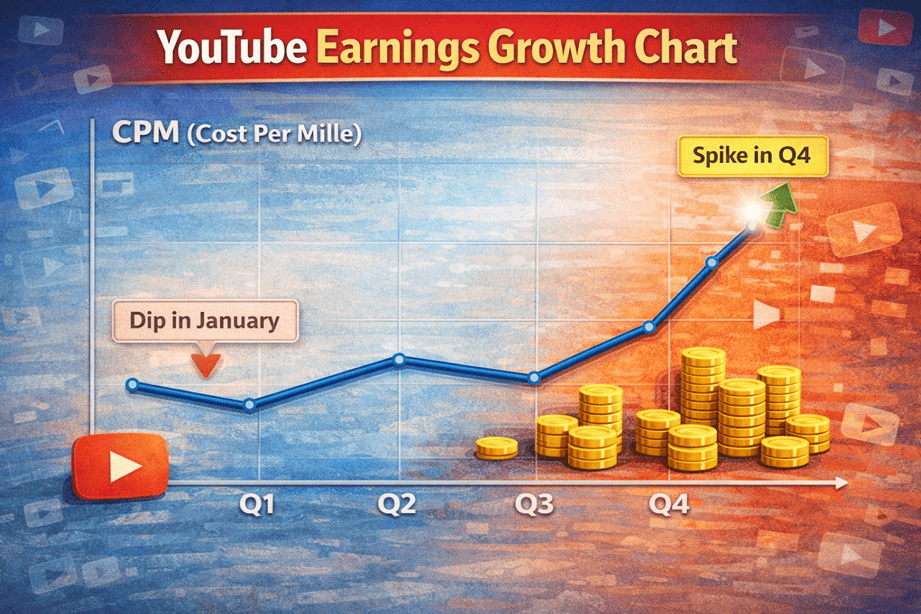
3. Seasonality YouTube CPM rates follow a predictable seasonal pattern:
- Q1 (Jan-Mar): Lowest CPMs of the year. Ad budgets reset, brands under-spend.
- Q2 (Apr-Jun): CPMs recover as spring campaigns launch.
- Q3 (Jul-Sep): Steady growth as brands prepare for Q4.
- Q4 (Oct-Dec): Highest CPMs of the year. Holiday shopping drives a 30–50% premium. This is when creators earn the most.
4. Audience Engagement YouTube’s algorithm rewards videos that keep viewers watching. Higher average watch time leads to better ad placements and higher-paying ad types (skippable TrueView ads pay more than bumper ads). A 70% watch-time rate on an 18-minute video earns significantly more than a 30% rate on the same video.
5. Click-Through Rate on Ads Some ad formats pay per click, not per impression. If your audience is purchase-intent (e.g., people searching for software recommendations), ad CTR is higher and your effective CPM rises.
How to Increase Your YouTube Earnings: 6 Proven Strategies
Knowing your earnings potential is half the battle. Here’s how to grow it:
-
Migrate to a Higher-CPM Niche — The biggest lever available. Pivoting even partially toward finance, business, or tech topics can transform your CPM rate overnight.
-
Target Tier 1 Countries — Publish in English, post at times when US and UK audiences are awake (8am–10am EST), and include relevant cultural references. Geography follows content.
-
Enable Mid-Roll Ads — Structure your videos to exceed 8 minutes and turn on mid-roll ads. Test 2-3 ad breaks on longer content.
-
Build a Sponsorship Rate Card — Don’t wait for AdSense to scale. Once you hit 10K–20K views per video, start pitching sponsors in your niche.
-
Grow an Email List — YouTube subscribers don’t belong to you; they belong to YouTube. Build an email list so you can monetize your audience independently through digital products and affiliate offers.
-
Post Consistently — The YouTube algorithm rewards channels that publish regularly. Twice-weekly is the sweet spot for most niches to maintain algorithmic momentum without compromising quality.
Conclusion: Know Your Numbers Before You Create
The creator economy rewards people who treat content creation like a business. That starts with knowing your revenue per view, understanding which levers affect your CPM, and benchmarking yourself against competitors.
Our YouTube Money Calculator gives you that foundation — for free. Whether you’re a brand researching influencer partnerships, a new creator planning your niche, or an established channel optimising for higher CPM, the data is now at your fingertips.
Run your first estimate today: insyfeed.com/tools/youtube-money-calculator
Related Tools: Instagram Money Calculator · TikTok Money Calculator · Influencer Rate Calculator · CPM Calculator